
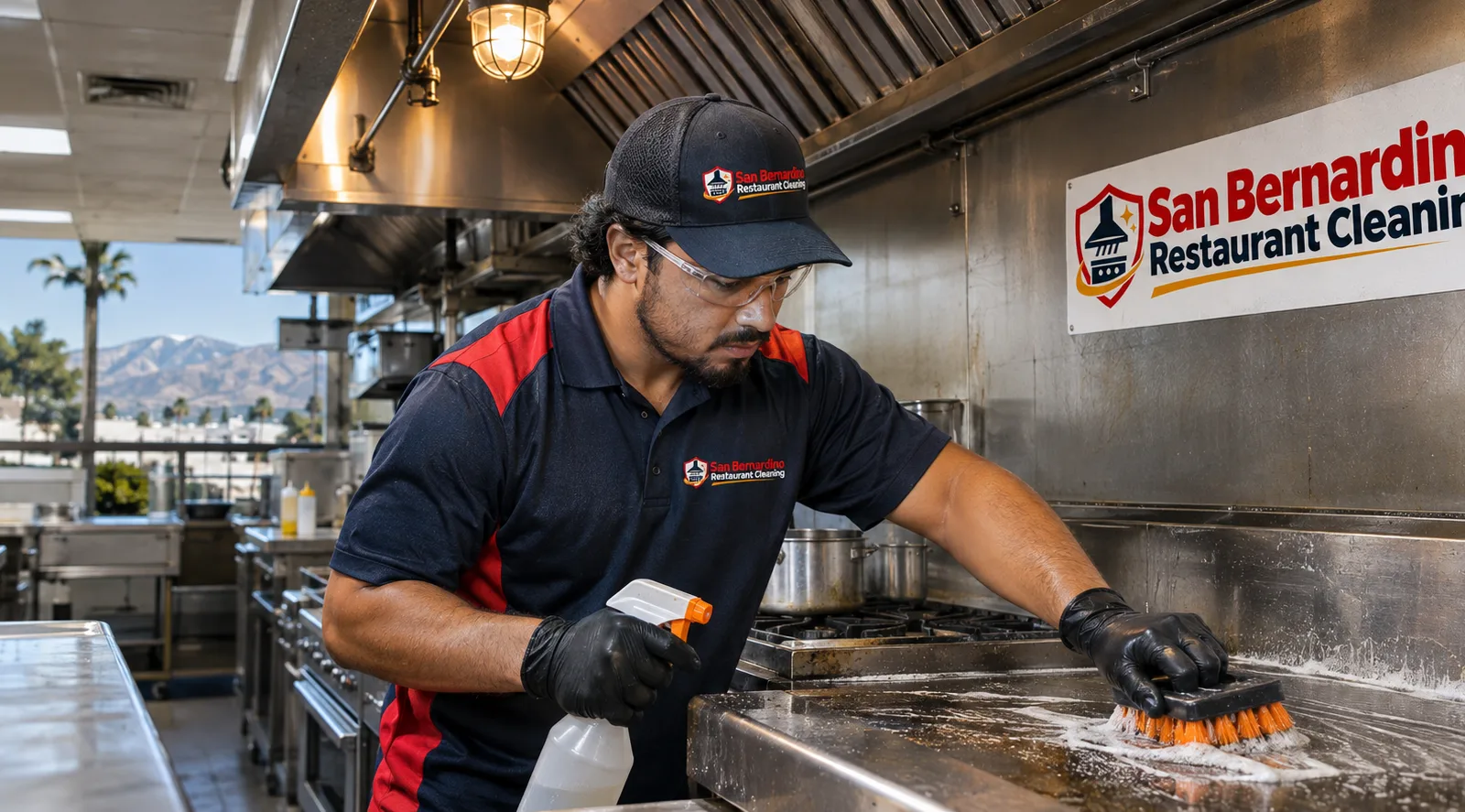
A professional cleaner degreasing stainless steel cooking equipment in an active San Bernardino commercial kitchen during a scheduled service window

Kitchen Cleaning · San Bernardino

Kitchen Cleaning Services

Detailed commercial cleaning for restaurant equipment, cooking lines, floors, walls, and hard-to-reach areas, with a scope planned around your kitchen and operating schedule.

✓Cooking lines and equipment exteriors ✓Floors, walls, and preparation areas ✓Scheduled and one-time service ✓Written scope before work

Operational cleaning scope

Commercial Kitchen Cleaning Services Built Around Your Operation

Kitchen Cleaning Services should address the grease, carbon deposits, food residue, and tracked-in soil that routine closing work cannot fully remove. San Bernardino Restaurant Cleaning provides scheduled and one-time care for restaurants, commissaries, cafés, commercial bakeries, and other food-service operations. The scope can cover cooking equipment, preparation areas, floors, walls, washable surfaces, and accessible spaces beneath or behind movable units.

Our work begins with a practical review of the kitchen. We identify the equipment and surfaces included, discuss access and shutdown requirements, and note areas that need extra attention. As restaurant specialists serving San Bernardino, we plan the work around food-service conditions rather than treating a production kitchen like an ordinary office or retail space.

Our location on S I St places the team near downtown San Bernardino and established commercial corridors such as Hospitality Lane. Kitchens near high-traffic dining and lodging areas may need cleaning scheduled between late closing and early preparation, while independent operators in areas such as Del Rosa may prefer periodic deep service. The useful local detail is the operating window: crews need enough time to clean thoroughly and leave surfaces ready for the operator's reopening procedures.
Equipment and surface care

What Professional Kitchen Cleaning Can Cover

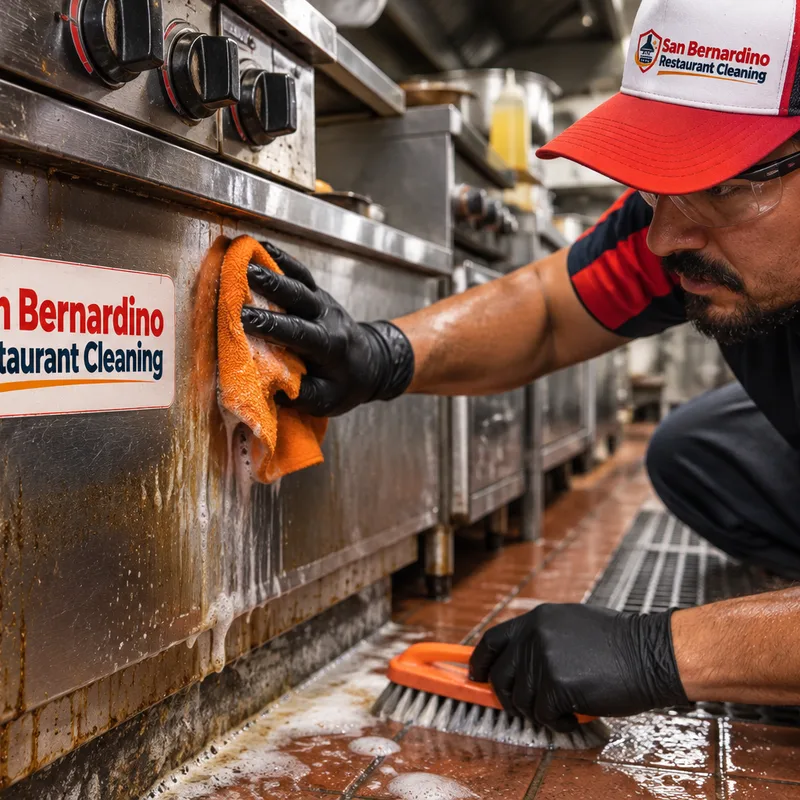
Close view of a cleaner removing grease from a stainless steel range exterior and the floor edge beneath a commercial cooking line
Equipment-safe methods are selected for the surface, soil, and manufacturer guidance.

A written scope may include stainless steel worktables, range exteriors, griddles after they are shut down and cooled, fryer exteriors, ovens, salamanders, sinks, shelving, washable wall surfaces, kick plates, floor edges, and accessible areas beneath equipment. Kitchen equipment cleaning can also address removable components when the unit manufacturer permits removal and the task is included in advance.

Degreasing is not a single-product task. Cleaners match the chemical and method to the surface, soil level, and equipment instructions. Alkaline degreasers are commonly used on compatible grease-coated surfaces, while stainless steel may require a less abrasive approach and wiping with the grain. Food-contact surfaces need an appropriate wash, rinse, and sanitizing procedure before the operator puts them back into service. Safety data sheets and product labels govern dilution, dwell time, protective equipment, and rinsing.

Some work requires another qualified trade. Cleaning visible, accessible equipment surfaces is different from servicing gas lines, electrical components, refrigeration systems, or internal machinery. Exhaust hood and duct work may also require a separate scope and qualified provider. We clarify these boundaries before work starts.

Detailed cleaning focus

Restaurant Kitchen Cleaning by Area

✓

Cooking Line

Degreasing can cover compatible range, fryer, oven, griddle, and warming-equipment exteriors, plus knobs, ledges, kick plates, and reachable gaps. Equipment must be shut down and cool enough to clean safely.

✓

Preparation and Wash Areas

Worktables, sinks, backsplashes, shelving, and other washable surfaces are cleaned according to their material and use. Food, utensils, and loose supplies should be removed or protected before service.

✓

Floors and Edges

Commercial kitchen deep cleaning targets grease film, soil at floor-wall transitions, corners, grout lines, and reachable spaces beneath movable equipment. The method depends on flooring, drainage, and slip risk.

✓

Walls and High-Touch Surfaces

Washable walls, doors, handles, switches, and touch points can be added to the scope. Cleaners avoid saturating outlets, controls, motors, and other moisture-sensitive components.

✓

Coolers and Storage Areas

Empty, accessible shelving and compatible interior surfaces can be cleaned when food-handling and temperature-control responsibilities are agreed upon. Operators remain responsible for product disposition and safe storage.

✓

Detail Work

Casters, legs, undersides, seams, and equipment gaps often hold residue missed during daily closing. Access depends on whether equipment can be moved without disconnecting utilities or creating a safety hazard.

From review to final check

How Our Kitchen Cleaning Company Plans the Work

  1. 01

    Review the Kitchen and Priorities

    We discuss the cooking line, preparation areas, flooring, equipment access, current condition, and the reason for service. A walkthrough or clear inventory helps distinguish routine detail work from heavy grease removal.

  2. 02

    Set the Scope and Service Window

    The plan identifies included surfaces, exclusions, access needs, and timing. We also discuss which equipment must be cooled, emptied, unplugged, or moved by authorized staff before cleaning begins.

  3. 03

    Protect and Prepare the Work Area

    Loose food, utensils, paper goods, and sensitive items are removed or protected. Cleaners place warning signs as needed, prepare products according to their labels, and keep moisture away from vulnerable components.

  4. 04

    Degrease, Scrub, Rinse, and Detail

    The crew works through the agreed areas using compatible tools and chemicals. Soil is loosened with the required dwell time, then removed without mixing incompatible products or using harsh abrasives on delicate finishes.

  5. 05

    Complete a Final Review

    Included areas are checked against the scope. The operator can then carry out any required equipment startup, temperature verification, food-contact sanitizing checks, or opening procedures before production resumes.

Local operating conditions

Commercial Kitchen Cleaning in San Bernardino

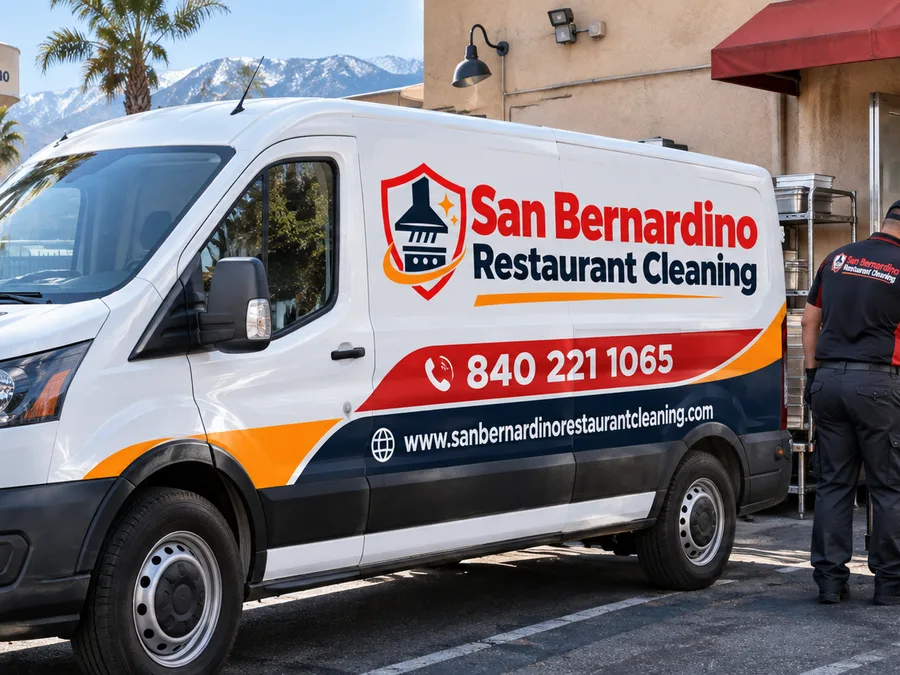
A commercial kitchen cleaning crew unloading labeled supplies and floor-care equipment at a San Bernardino restaurant service entrance
Access, cooling time, and the operating schedule are addressed before the crew starts.

San Bernardino restaurants operate in several distinct settings. Downtown kitchens may have constrained loading access or shared service areas, so arrival instructions and waste handling need to be settled before the crew arrives. Hospitality Lane businesses often work around hotel, dining, and event traffic, making a firm service window especially useful. Operators near the Inland Center commercial area may also need to coordinate access with property or center rules.

Southern California heat can raise indoor working temperatures around an inactive cooking line, particularly when cleaning is scheduled after a full service period. A realistic cooling interval matters because hot equipment should not be sprayed or scrubbed, and many degreasers perform best within the temperatures stated on their labels. The kitchen should also retain adequate ventilation during chemical use without exposing food or occupied dining areas.

Professional kitchen cleaning supports an operator's sanitation program, but it does not replace daily cleaning, pest-control work, equipment maintenance, or regulatory inspections. Food facilities in San Bernardino County are subject to oversight by the San Bernardino County Department of Public Health. Each operator remains responsible for meeting applicable food-safety requirements and verifying that the kitchen is ready to reopen.

Planning your budget

How Much Do Kitchen Cleaning Services Cost in San Bernardino?

Commercial kitchen cleaning in San Bernardino typically ranges from about $500 to $1,500 for a defined deep-clean visit, while large kitchens or heavy grease buildup may cost $2,000 or more. These are general, nonbinding estimates, and limited equipment-detail work may cost less.

Final pricing depends on kitchen size, grease level, included equipment, floor condition, access, required crew time, and whether units can be moved safely. Overnight scheduling or extensive scraping may also affect labor. The exact cost is confirmed after a walkthrough or detailed scope review.

Request a Callback

Before and after service

Prepare for a Safer, More Productive Service Visit

Good preparation gives restaurant kitchen cleaners clear access and reduces avoidable delays. Confirm the service window with managers, kitchen staff, security, and property contacts. Complete the normal shutdown process early enough for cooking equipment to cool. Remove exposed food, utensils, small appliances, and disposable goods from the work areas. Mark equipment that must not be moved, opened, unplugged, or exposed to moisture.

Tell the crew about loose flooring, damaged cords, gas odors, active leaks, sharp edges, unstable shelving, pest activity, or equipment that does not shut down correctly. Those conditions may require correction before cleaning can proceed safely. Do not ask cleaners to disconnect utility lines or move equipment that requires a technician.

After service, the operator should inspect the included areas and follow the facility's reopening procedures. That may include sanitizing designated food-contact surfaces, reconnecting or restarting equipment through authorized staff, checking refrigeration temperatures, replacing stored products, and documenting completed work. A deep clean is most useful when it fits into a continuing schedule of daily, weekly, and periodic tasks.

A defined scope makes scheduling and pricing clearer. Tell us which equipment and kitchen areas need attention, when production stops, and when the space must be ready for staff.

Call for a Free Quote

Practical answers

Questions About Restaurant Kitchen Cleaning

Review common questions about timing, preparation, equipment access, exhaust systems, and defining an accurate commercial kitchen cleaning scope.

How long does commercial kitchen deep cleaning take?+

A defined commercial kitchen deep cleaning commonly takes several hours, while a large or heavily soiled operation may require a full shift or more. Kitchen size, grease buildup, equipment access, floor condition, and cooling time determine the schedule. San Bernardino restaurants with restricted loading access or firm reopening times should provide those details during the scope review.

Can cleaning take place after the restaurant closes?+

Yes, after-hours cleaning can be planned when access, security, ventilation, and equipment shutdown are arranged in advance. Cooking units must have enough time to cool, and an authorized contact should be available for entry and final review. Businesses near Hospitality Lane may benefit from scheduling around dining, lodging, and event traffic.

Does professional kitchen cleaning include exhaust hoods and ducts?+

Exhaust hoods and ducts are included only when they are specifically listed in the written scope and the provider is qualified for that work. Cleaning equipment exteriors and nearby surfaces is not the same as cleaning an exhaust system. Ask for clear boundaries covering filters, hood canopies, fans, ducts, access panels, and any required service documentation.

Do restaurant staff need to empty the kitchen first?+

Staff should remove or protect exposed food, utensils, paper goods, and portable equipment in the scheduled work areas. Coolers or storage units should be emptied only when that task is agreed upon and food can remain under safe temperature control. The operator should also identify anything cleaners may not move, unplug, or open.

Can cleaners move ranges, fryers, and refrigerators?+

Cleaners can move only equipment that is designed to move safely and does not require utility disconnection or a qualified technician. Gas-connected, hardwired, plumbed, unstable, or very heavy units should remain in place unless authorized personnel prepare them. Accessible gaps can still be addressed with suitable tools when movement is unsafe.

How often should a San Bernardino restaurant schedule deep cleaning?+

The right frequency depends on cooking volume, menu, grease production, staffing, equipment layout, and the results of routine inspections. A high-output fryer or griddle line may need detail work more often than a light-use preparation kitchen. Build the schedule from observed soil levels, equipment instructions, and applicable San Bernardino County food-safety requirements.

What should be included in a commercial kitchen cleaning quote?+

A useful quote should identify the included areas and equipment, exclusions, preparation duties, access window, expected duration, and pricing basis. It should also state whether floors, walls, removable parts, coolers, high areas, or exhaust components are included. Photos and an equipment list can improve an initial estimate, but a walkthrough may be needed for heavy buildup.

Plan a Cleaner Commercial Kitchen

Share your kitchen size, equipment list, problem areas, and preferred service window. San Bernardino Restaurant Cleaning will use those details to prepare a practical scope for the work.