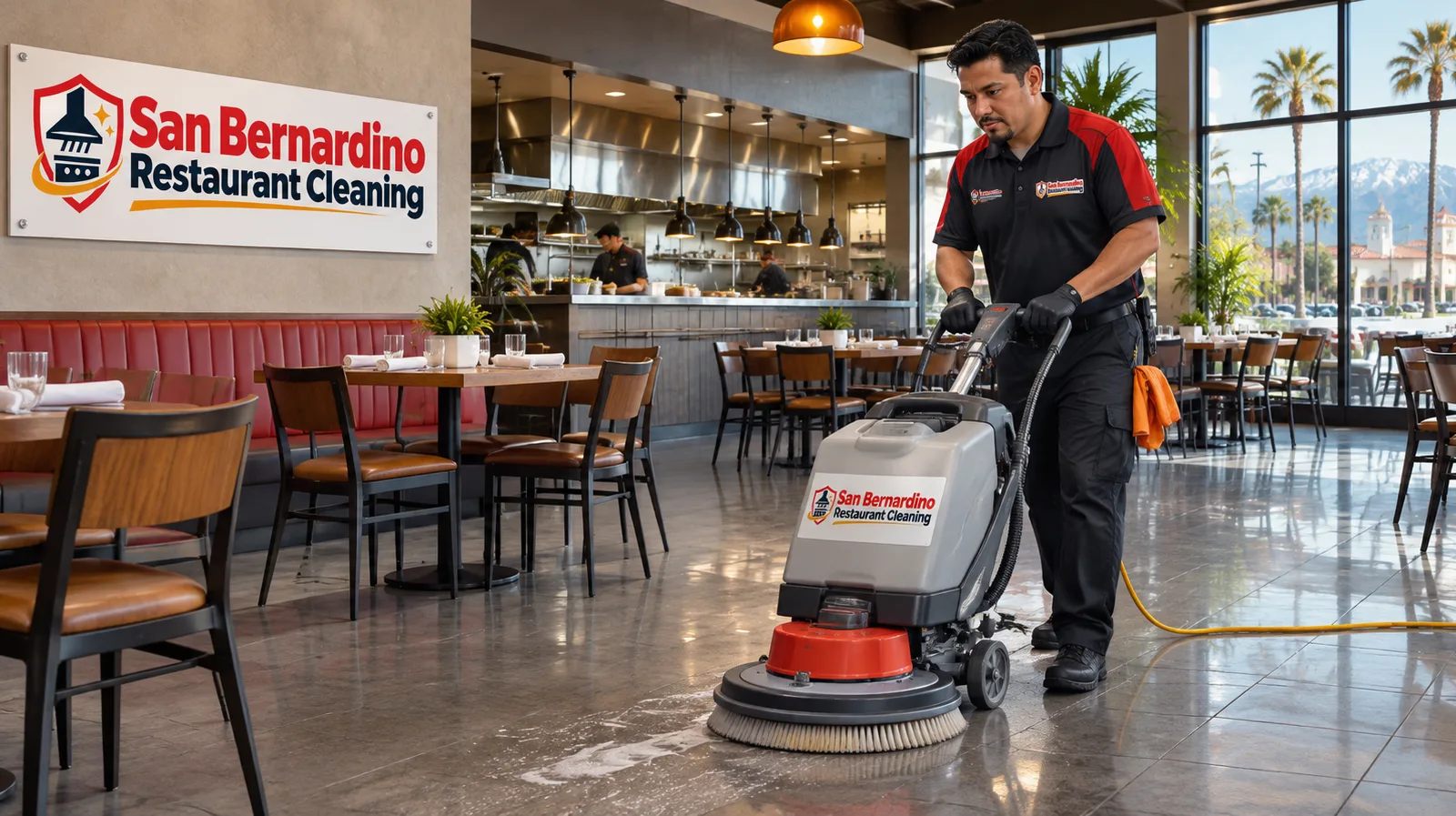
A professional cleaner using commercial equipment on the floor of a spotless Fontana restaurant dining room, with clean tables and the open kitchen visible in the background

Restaurant Cleaning · Fontana

Restaurant Cleaning Services Fontana

Detailed commercial cleaning built around your kitchen equipment, dining schedule, floor surfaces, and food-safety priorities.

✓Kitchen and cook-line surfaces ✓Dining rooms and restrooms ✓Surface-specific floor care ✓Written, site-specific scope

Operational cleaning scope

Reliable Restaurant Cleaning Built Around Your Operation

Restaurant Cleaning Services Fontana should support daily operations without disrupting prep, service, or closing duties. San Bernardino Restaurant Cleaning develops scopes around each facility's layout, hours, soil levels, equipment, and floor materials. Work can be scheduled after closing, before opening, or during another agreed service window.

Our team handles the areas where grease, food residue, dust, and foot traffic create recurring cleaning demands. That includes cook lines, food-preparation surfaces, dining rooms, restrooms, entry areas, and back-of-house floors. From our base at 207 S I St, Suite 4, San Bernardino, CA 92410, San Bernardino's local restaurant service coordinates restaurant cleaning in Fontana.

Fontana restaurants operate in varied settings. Dining businesses near the Auto Club Speedway area may face event-related traffic surges, while restaurants around Sierra Avenue often manage steady customer turnover and busy entrances. Locations near Interstate 10 and Interstate 15 can also collect tracked-in grit and roadside dust. A useful cleaning plan accounts for those conditions rather than applying the same checklist to every property.
Front and back of house

What Restaurant Cleaning Services Fontana Can Cover

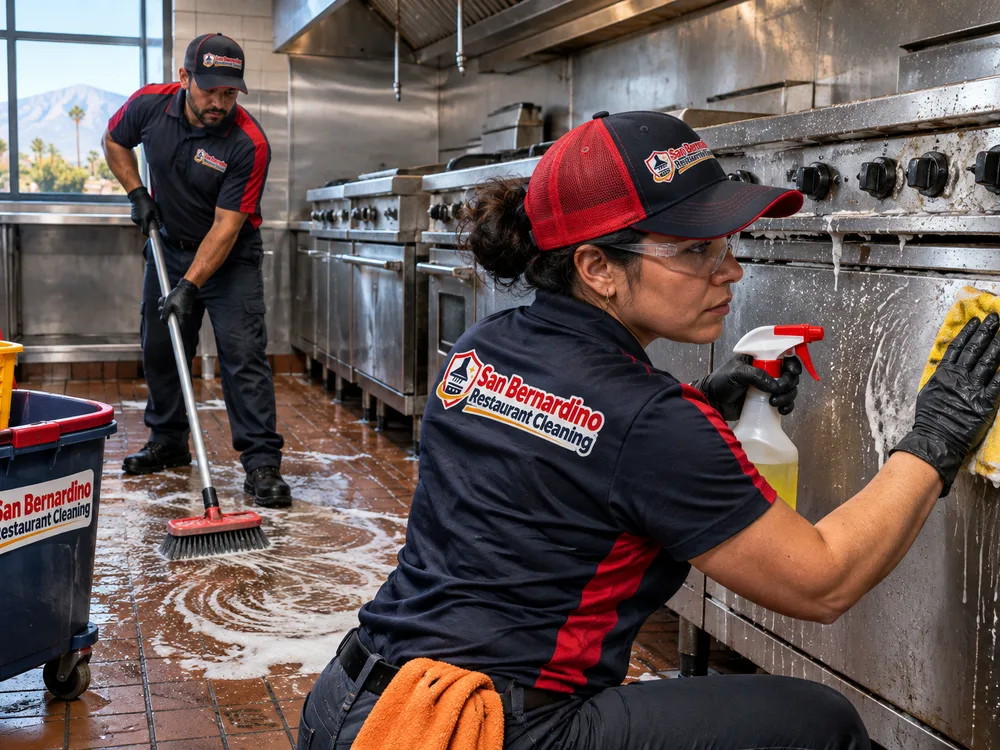
A trained commercial cleaner degreasing stainless steel equipment exteriors and scrubbing a restaurant cook-line floor with food products removed from the work area
Kitchen cleaning should follow surface requirements, product labels, and the restaurant's access rules.

A complete scope starts with the actual work areas, not a generic list. In the kitchen, service may cover degreasing approved hard surfaces, wiping equipment exteriors, cleaning splash zones, scrubbing floors, and addressing buildup along edges and beneath movable items. Food-contact surfaces require products and procedures suitable for their intended use, including any rinse or contact-time instructions on the label.

Dining-room work may include tables, chairs, booths, ledges, partitions, doors, and other touchpoints. Floor care is matched to the material. Tile and grout can require agitation and soil extraction, while resilient floors need compatible chemistry and controlled moisture. Restroom cleaning covers fixtures, partitions, counters, dispensers, touchpoints, and floors.

The scope can also identify exclusions and access requirements. Hood and exhaust-system cleaning, pest control, hazardous-material response, and equipment repair are specialized services that should not be treated as ordinary janitorial tasks. Clear boundaries help restaurant managers understand exactly what will be cleaned during each visit.

Detailed cleaning focus

Cleaning for Front and Back of House

✓

Kitchen Surfaces

Degreasing for accessible walls, splash areas, counters, shelving, and equipment exteriors, using products selected for the surface and type of soil.

✓

Cook-Line Floors

Scrubbing around equipment, edges, corners, and other accessible areas where grease and food debris can accumulate during service.

✓

Dining Areas

Cleaning for tables, seating, partitions, ledges, doors, and touchpoints, with attention to crumbs, fingerprints, spills, and visible residue.

✓

Floor Care

Routine mopping, machine scrubbing, grout attention, or other appropriate methods based on floor material, finish, condition, and slip concerns.

✓

Restrooms

Cleaning and disinfection of fixtures and touchpoints, plus care for partitions, counters, dispensers, mirrors, and floors.

✓

Entries and Service Areas

Care for entrances, waiting areas, pickup zones, hallways, and accessible back-of-house spaces affected by customer and employee traffic.

Methods matched to the operation

A Practical Plan for Restaurant Cleaning in Fontana

Restaurant Cleaning Fontana requires more than visible wiping. Grease is commonly removed with an appropriate degreaser and mechanical agitation, while disinfectants must remain wet for the contact time stated on their labels. Sanitizing and disinfecting are different processes, so the method should match the surface and the restaurant's sanitation procedures.

Cross-contamination controls matter as well. Color-coded cloths and tools can separate restroom work from dining and food-preparation areas. Cleaning should generally move from cleaner areas toward dirtier areas and from higher surfaces toward floors. Food, utensils, and exposed ingredients need protection or removal before chemicals are used nearby.

Fontana's warm, dry conditions can contribute to dust and tracked-in grit at entrances, particularly at properties exposed to major traffic corridors. That grit can dull floors and settle along baseboards if it is not removed regularly. Entry mat care, dry soil removal, and scheduled floor scrubbing can be included when the property needs them.

From review to ongoing service

How We Set Up Your Cleaning Service

  1. 01

    Review the Facility

    We discuss the kitchen, dining room, restrooms, flooring, operating hours, access procedures, current concerns, and any areas employees already clean.

  2. 02

    Define the Written Scope

    The plan identifies included areas, service frequency, cleaning methods, exclusions, and responsibilities such as moving supplies or securing food before work begins.

  3. 03

    Set the Service Window

    Cleaning is arranged around prep and customer service. The schedule also accounts for alarms, keys, loading access, and the time floors need before normal traffic resumes.

  4. 04

    Complete and Check the Work

    The crew follows the agreed task list and checks priority areas such as edges, touchpoints, restrooms, cook-line floors, and customer-facing surfaces.

  5. 05

    Adjust as Operations Change

    Menus, equipment layouts, seasonal demand, and operating hours can change. The scope can be reviewed when soil levels or access needs shift.

A scope matched to the site

Why Restaurants Need a Site-Specific Scope

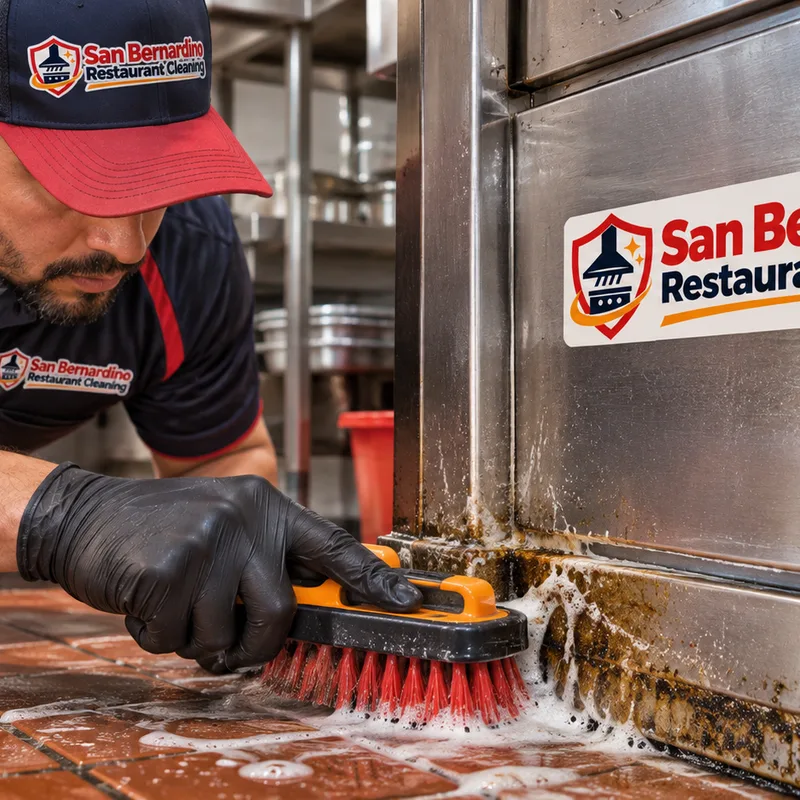
Close view of a commercial restaurant floor edge being scrubbed beside stainless steel equipment, showing detailed grease removal along the base and corner
Edges, corners, grout lines, and areas beside equipment should be named in the cleaning scope.

A quick-service kitchen, a full-service dining room, and a small café do not create the same cleaning load. Frying produces different residue than baking, while beverage stations and pickup counters have their own spill patterns. Seating capacity, restroom traffic, late-night hours, and the amount of movable equipment also affect labor.

San Bernardino Restaurant Cleaning focuses on defined tasks and realistic access. Managers should know whether service includes equipment exteriors, floor edges, baseboards, dining furniture, interior glass, or periodic detail work. They should also know which tasks require a separate specialist. That clarity makes it easier to compare proposals and verify completed work.

Frequency should follow actual use. Some areas may need attention every service visit, while walls, high ledges, grout lines, or other detail items may fit a rotating schedule. The goal is a workable program that keeps recurring soil under control and gives staff a clear division of responsibilities.

Get a written cleaning scope based on your restaurant's layout, operating hours, surface materials, and highest-priority areas.

Call for a Free Quote

Practical answers

Questions About Restaurant Cleaning Services in Fontana

Review common questions about pricing, scheduling, cleaning frequency, food-area preparation, specialized exhaust work, and comparing written scopes.

How much do restaurant cleaning services in Fontana cost?+

Restaurant cleaning is priced according to labor, frequency, facility size, and the condition of the areas included. A compact dining room with routine floor care requires a different crew plan than a full kitchen with heavy grease, multiple restrooms, and periodic detail cleaning. Access after closing, equipment movement, floor treatment, and the amount of buildup also affect price. A facility review is the best way to establish a written scope and dependable quote.

Can cleaning be scheduled after the restaurant closes?+

Yes, service can be planned for an agreed window after closing, before opening, or during another low-activity period. The schedule must allow enough time for access, cleaning, product dwell time, floor drying, and final checks before employees or customers return. Fontana locations with late-night service may need a different schedule than breakfast or lunch-focused operations.

How often should a Fontana restaurant use professional cleaning?+

The right frequency depends on cooking volume, customer traffic, operating hours, and the tasks assigned to in-house staff. Cook-line floors, restrooms, and dining touchpoints often need frequent attention, while baseboards, high surfaces, grout, and other detail tasks may rotate. A scope should separate routine work from periodic deep cleaning so important tasks are not overlooked.

Do restaurant cleaning services include hood and exhaust cleaning?+

Routine restaurant cleaning should not be assumed to include commercial hood, duct, fan, or exhaust-system cleaning. Those systems require specialized procedures and should be clearly identified as included or excluded before work begins. San Bernardino Restaurant Cleaning can define the janitorial scope around the cook line without presenting ordinary surface cleaning as exhaust-system service.

Can the crew clean while food or kitchen tools are present?+

Food and food-contact items should be protected or moved before nearby chemical cleaning begins. The restaurant and cleaning crew should agree on who clears counters, stores utensils, moves ingredients, and provides equipment access. Product labels govern dilution, contact time, rinsing, and surface suitability, so chemicals should never be applied casually around exposed food.

What should I compare when reviewing restaurant cleaning quotes?+

Compare the exact areas, tasks, frequency, service window, periodic work, exclusions, and access assumptions in each quote. Confirm whether floor edges, grout, equipment exteriors, interior glass, dining furniture, and restroom supplies are included. For a Fontana property near a high-traffic corridor or event destination, ask how the plan addresses entrance grit and sudden increases in customer traffic.

Can the cleaning plan cover both the dining room and kitchen?+

Yes, one scope can cover front-of-house and back-of-house areas when the tasks and procedures are clearly separated. Color-coded tools, area-specific products, and an orderly workflow help reduce cross-contamination risks. The written plan should identify any equipment, locked spaces, or food-preparation surfaces that need special access or instructions.

Plan a Cleaner Restaurant in Fontana

Share your operating hours, facility layout, floor types, and current cleaning concerns. San Bernardino Restaurant Cleaning will help define a practical scope and service schedule for your business.